

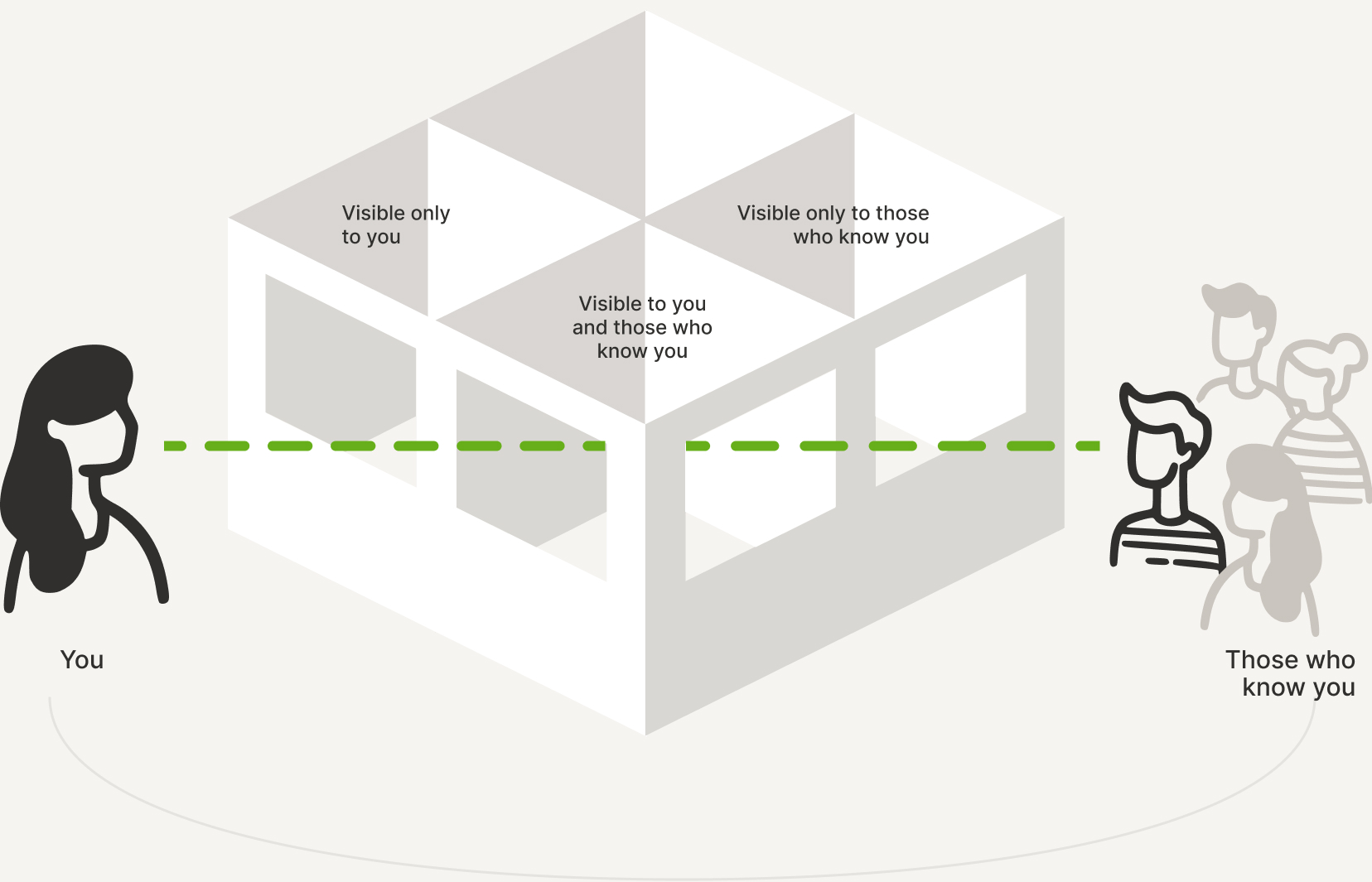
This test was created by Joseph Luft and Harry Ingham in 1955. The Johari Window is a square divided into four parts, each representing information about a person communicated during interaction.
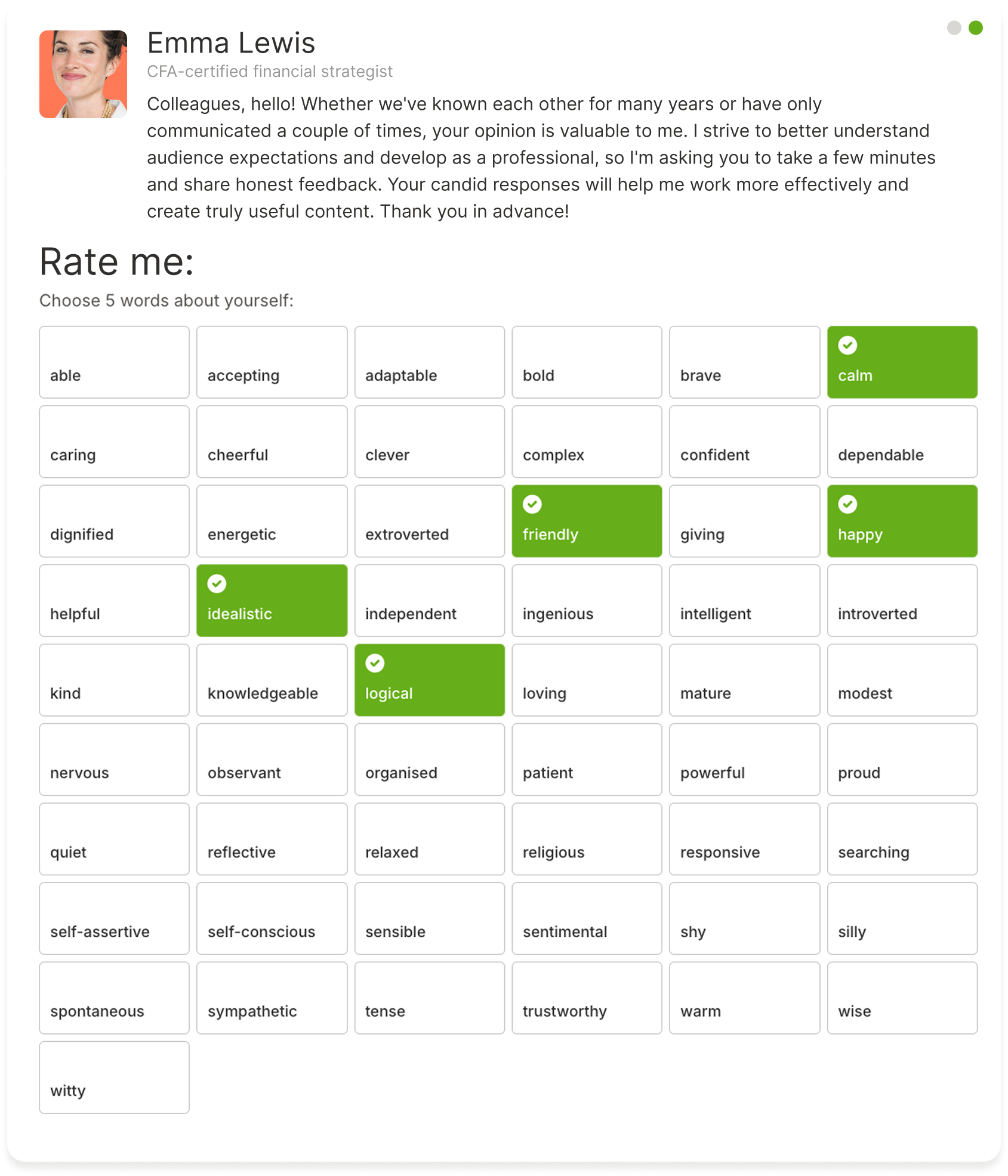
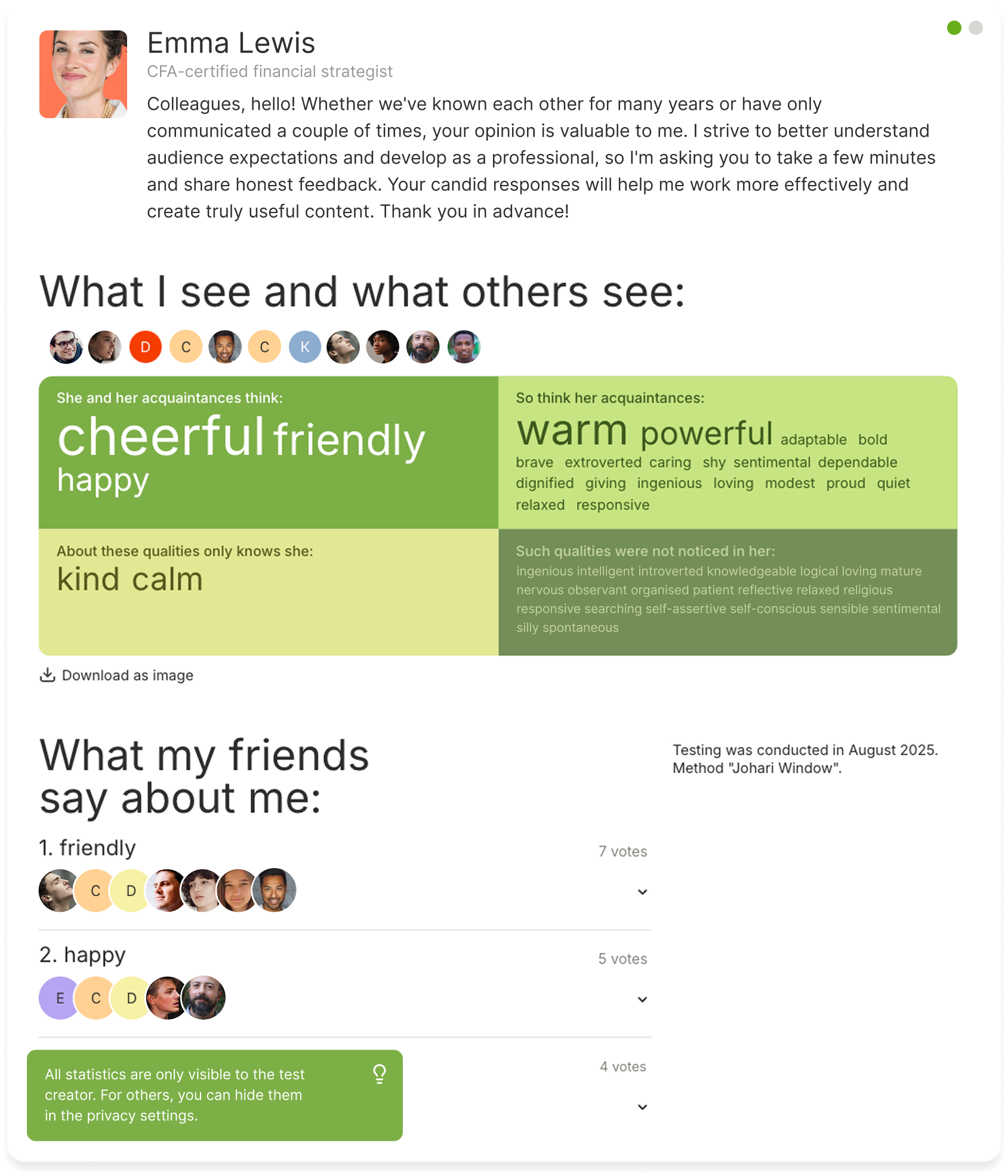
Square №1 - 'Open' - contains information about a person known both to themselves and others. When people exchange information and understand each other, their relationships improve. The larger the area of this square, the more information about the individual is known, the more effective, productive, and mutually beneficial the relationships between people will be.
Square №2 - 'Blind Spot' - includes information known to others but unknown to the individual. The larger the area of this square, the harder it is to achieve mutual understanding.
Square №3 - 'Hidden' - includes information about oneself, known to the individual but unknown to others. This complicates communication as it gives one-sided advantages to the individual, allowing them to hide negative information from others.
Square №4 - 'Unknown' - contains information unknown both to the individual and others. By reducing its area, one can improve communication effectiveness.